Monday, June 1, 2020

Blog #5


Class Reflection

3 Things I have learned:

When I think back on everything I have learned this quarter, it's hard to limit it down to just three things. I feel like the amount of information I have absorbed has been significantly higher than most courses we engage in throughout the program (at least for me personally). So, I have decided to focus on the main topics.

1. IDM's
Before entering this class I didn't know a thing about inquiry teaching, nor had I even heard of an IDM. I learned the power of beginning a lesson with a broad question and the critical thinking that pours into each supporting question. I think my biggest growth was learning how to create diverse content while remaining age appropriate. When considering a younger age range, it can be difficult to incorporate in depth lessons but I feel like the repetitive practice helped me to determine social studies lessons that are beneficial to the foundational years.  

Hypothesis clipart inquiry based learning, Hypothesis inquiry ...

2. Project based units:
I always had a general idea about projects as I loved doing them in class. However, I more so learned how to create one from a teachers perspective. I had no idea the amount of planning, preparation, and trial and error that went into creating these methods. I definitely learned how to not only connect a project to the IDM but also to support the content with these hands on products. Something cool that I recognized was how hand in hand inquiry teaching went with product based learning. It now feels as if teaching inquiry without a project would feel like the equivalent of wearing shoes without socks. I feel way more confident incorporating social studies content into my classroom using a critical thinking and hands on approach. 

What is Project Based Learning? — Magnify Learning

3. Cultural festivals:
During this class I learned how to appropriately learn and share about various cultures without being pushy or offensive. I loved the idea of a cultural festival because it gives students the choice on what they would like to share. It doesn't force them to talk about their culture in ways they don't want to but instead encourages them to share a piece of information about themselves. I think it's awesome to give students an open and safe environment to talk about the things that define them. I also believe this is awesome to encourage and educate on diversity around us. I would definitely use these methods in my classroom and it makes the topic more approachable in a respectful manner. I never thought of this prior and this was one of my favorite things to learn how to incorporate within our own classrooms. 

Feast clipart cultural celebration, Feast cultural celebration ...

One challenge/ concern:

I am the first to admit that social studies isn't my strong suit. I definitely don't feel like I know enough about all of the important topics. As educators, we must be completely informed in what we are teaching in order to effectively and accurately relay that information to our students. I truly worry that I do not know enough about events from the past or historical figures to give my students the most beneficial experience. I hope to continue to research and educate myself in any way possible but it is still intimidating to wonder if you have perfected the subject enough. 

Processing GIFs | Tenor

Wednesday, April 29, 2020

Blog #4


Project Based Learning

For me, these were always the most fun aspects of school. Given that I am a complete advocate for hands on learning, the project aspect of this always grasped my attention. As far as what it is, I would define project based learning as a long term hands on activity. Usually it contains some sort of research or questioning that later builds into a final product or presentation. Sometimes, you are using the project as a way to research and learn new materials during the process. Typically, you are diving deeper into a topic and creating a visual representation of what you learned or the answer you found. I am the first to admit I don't know all of the terms associated with teaching. I remember doing activities like this when I was younger but I'm not positive they fall under this category. However, considering the name contains both project and learning, I don't see why they wouldn't!

How hands-on learning fires up your brain | Leland Melvin - YouTube

I think this goes hand in hand with social studies inquiry because it just creates the hands on portion of the teaching style. For project based learning, your product could be centered around the answer to your compelling question. Rather than just developing a written answer, students would be challenged to represent or present it visually, too. Not only does this assess their level of understanding but it deepens it as well. Using this technique, we are giving our students an extension on what they already know and allowing them to build connections with the content through a big project or presentation. I think this can also help us to develop question ideas for social studies inquiry as the project should serve as the answer to the question. We can then work backwards and discover what questions students need to be asked in order to achieve the final product. Most importantly, what is the most significant information we need to educate them to best prepare them for the project. Overall, they accent one another by turning what could be a bland lesson into an engaging, intellectually rigorous, personally relevant, and hands on one. 

What is Project-Based Learning? — Magnify Learning

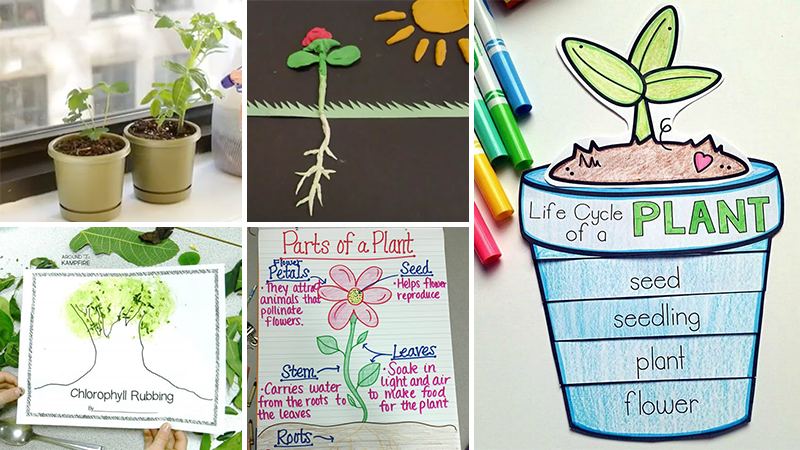
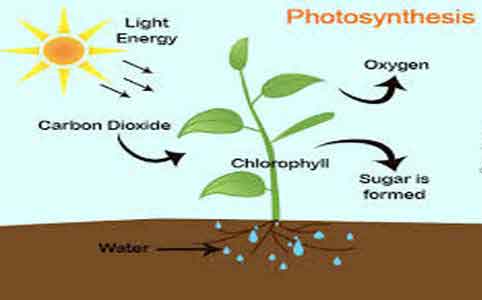
When I researched various projects online, I found one that I completed in elementary school and absolutely loved. For this project, students plant their own seed, water it daily, leave it in sunlight, and monitor it's progress as it grows. I think this can be used in any K-1st classroom to achieve the most learning. I would personally use this in my own classroom to teach photosynthesis. Students would adjust the amount of sunlight and water their plants were receiving to monitor the impacts. Another lesson could be as simple as analyzing the cycle of a plant. This is such a hands on way to get students to understand the process as well as visualize how it works. Since students will have their own plant they they are growing and exploring throughout the unit, they will be more excited about the results. At the end of the unit, students get to take their plant home and continue to nourish it if they decide. 

50 Best classroom plants images | Plants, Classroom, Plant science17 Creative Ways to Teach Plant Life Cycle - WeAreTeachersPhotosynthesis: Definition, Process and Its Significance | Biology ...

Thursday, April 23, 2020

Blog #3

Samantha's 2nd Grade Inquiry

RULES


Theme #4 Individual Development and Identity
- Knowledge: Individual choices are influenced by personal and social factors.

Standard:
D2.Civ.12.K-2. Identify and explain how rules function in public (classroom and school) settings.
Compelling Question
What impact do rewards have on following the rules?

Supporting Questions
1. How do rewards make kids feel?
2. What other factors influence kids to follow the rules?
3. How can rewards be seen as unfair/ unequal in a classroom?

Compelling Question Answer

Rewards help motivate kids to follow the rules. They make people feel happy and liked. One of my classmates, Zach, said it makes him feel special. When I asked my friends what makes them follow the rules, most of them said they don’t want to get in trouble. Kids know if they are bad then the teacher or their parents will be mad at them. Some said they follow the rules to reach their goals. I learned that rewards aren’t the only reason people follow the rules. Then our teacher asked us if we think rewards are fair. We watched a video about some kids who have trouble following the rules even when they try their hardest. These kids never got rewards. When we talked in our group, we realized that Suzie had been given better rewards than Harry.She got her favorite piece of candy while he only got a sticker. I like rewards and how they make me feel but I now know they are not always fair to everyone.


Answering A Question Clipart


Method Behind the Madness

When designing a compelling question, my partner and I wanted to get the students perspective on a controversial teaching method: incentive. As teachers, we seek various factors that may spark motivation in our students. For many, rewards have proven to make students work harder. So, we designed a question that measures how big of an impact these incentives have on students following the rules. I would argue this qualifies as a compelling question because it is both intellectually rigorous and personally relevant. It get's students thinking about the various pros and cons surrounding rewards and encourages them to relate it back to personal feelings and experiences. Students get to share their opinion on the method and the underlying feelings that we as teachers may not be aware of. It also is open ended and provides a broad topic that can be examined further.


Gold Star Sticker by Lost Lily for iOS & Android | GIPHY


For our supporting inquiry, we chose questions that deal with personal feelings/ experience, motivational factors outside of reward, and possible inequalities the method may bring. We chose these supporting questions because they dive into three different perspectives of incentive teaching. It first shows how students feel about it. Typically these will be positive reactions. It then draws attention to other factors that encourage students to follow the rules. This shows a minimized impact of reward. Lastly, it emphasizes the unfair aspects of reward. This focuses on some rewards being better than others when students are following the same rules and expectations. It also closes in on students with behavioral issues that may not be given the same opportunity to earn a prize even if they are working just as hard at following the rules. By applying these concepts and ideas, students should get a better idea on how big of a role rewards truly play in obeying the rules.


Teen Brain GIF - Find & Share on GIPHY


As far as choosing a standard, we looked for the concept that was most similar to our compelling question. The obvious place to start was in the civics section that strongly emphasized rules and power. Although there was nothing about incentive, we decided focusing on the function of rules was most appropriate. Our overall goal was to determine the function of rules in terms of incentive which is where we found the connection. We then tried to find a theme that didn't mimic our decided concepts but instead built off them. For that reason, we felt personal development in terms of factors is the after affect of using incentive to motivate behavior. Overall, these feelings and actions shape our students identities by helping them determine what they believe in and who they are in a behavioral sense.


Who Am I? 10 Fun Facts – Perfect Chaos


Thursday, April 16, 2020

Blog #2

My Growing Thoughts on Social Studies Inquiry


             As much as I hate to admit it, my prior knowledge on social studies inquiry was slim to none. Given the title, the only two conclusions I could confidently draw were the incorporation of history and questioning. However, I have now learned it runs much deeper than what initially meets the eye. Social studies inquiry explores the historical world through the lens of a question. Beginning with the core, the compelling question fills the role of a trunk. This is the foundation that connects to the roots and creates the life that its additional components feed off of. Supportive questions on the other hand, resonate as branches. Realistically speaking, it adds detail to what is already formed. However, in order to make this tree come to life with beauty and diversity, the various disciplinary sources must play the role of leaves. This represents the flourished learning and newly discovered ideas. Given this concept, I now understand the critical thinking that students exhibit when participating in this type of learning. They apply diverse thoughts, independent opinions, research based information, and analysis to connect the different aspects of the "tree". In correlation, they are given the opportunity to take the reigns of their own education and dictate what information they want to know. Students are not only learning the required standards, but adding interests and findings of their own.  By posing such an open ended question in a learning environment, students have the opportunity to not only dig deeper into research, but determine their own opinions and findings on the content as well. Now that I know more, I am shocked at the benefits this type of learning has on social studies overall. It makes me question if my elementary experience would have been significantly better if my teachers applied these same educational methods in their classrooms.  


Root Brain Neuron Tree Plant Stem, PNG, 543x591px, Root, Artwork ...


               When planning a strategy to tackle the "Time to Process" assignment, I realized every portion surrounded the analysis: "what components form an effective compelling question?" Luckily, between readings and online class, the criteria became relatively clear. When creating my own inquiry and determining the accurate representation of a compelling question, I put myself through a four step test: 1."Is it open ended?" 2."Does it provide content that is intellectually rigorous?" 3."Does it show personal relevance?" 4."Does it require critical thinking?" Once I had a system to follow, the process became faster and my understanding of the method expanded. From here I determined that compelling questions push critical thinking, understanding, and deeper learning. However, supporting questions are the aspect that sustain it. In order to answer such an open ended question, students must develop or answer supporting questions to minimize the amount of concepts they focus on at once. By doing so, they will not only find an answer, but also learn more about the topic as a result. The bottom line is both a compelling and supportive question need one another to effectively reach an accurate result. Without each other, the answer would be too broad or not detailed enough to understand an entire historical event or monument. 

We Need Each Other | JohnJFrady.com

            In response to my findings, I have began to create questions about this "new" teaching method. Above all, I am curious why more teachers don't incorporate social studies inquiry within their classrooms if the benefits have been proven to be so pivotal for students. Part of me feels like it is simply a fear of trying a new teaching style that's outside of their comfort zone. On the other hand, I wonder if it's a fear of failure or simply being unaware of inquiry teaching. Regardless, I'm excited to try this method in my own classroom and determine it's accuracy first hand!


That Is The Question GIFs | Tenor


Blog #5

Class Reflection 3 Things I have learned: When I think back on everything I have learned this quarter, it's hard to limit it down...